Camera
Use camera keys to frame a shot independently of its artwork. Camera X/Y specify pan offsets from the original framing. At X=0, Y=0, and zoom=1, the canvas keeps its original framing. A larger zoom moves closer. Rotation uses radians.
const shot = project.addScene('Street').addShot('Push in');
const panel = shot.addPanel({ durationFrames: 72 });
project.production.addCameraKeyframe(shot.id, 0, {
  x: 0, y: 0, zoom: 1, rotation: 0, easing: 'ease-in-out',
});
const endKey = project.production.addCameraKeyframe(shot.id, 71, {
  x: 70, y: -30, zoom: 1.35,
});
The example assumes a 1280×720 project starting at frame 0. For later shots, use their global frame positions.
Revise the framing
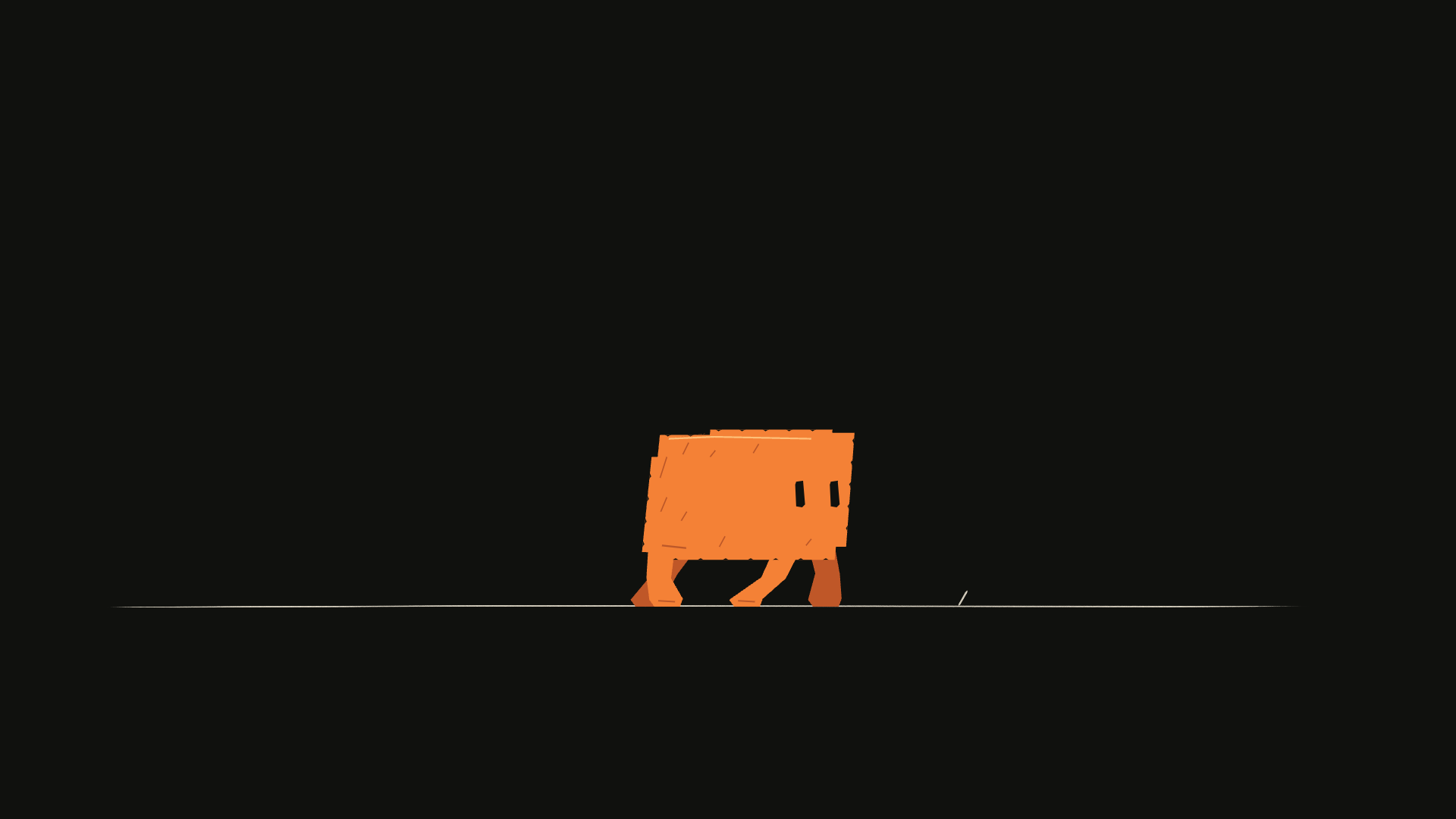
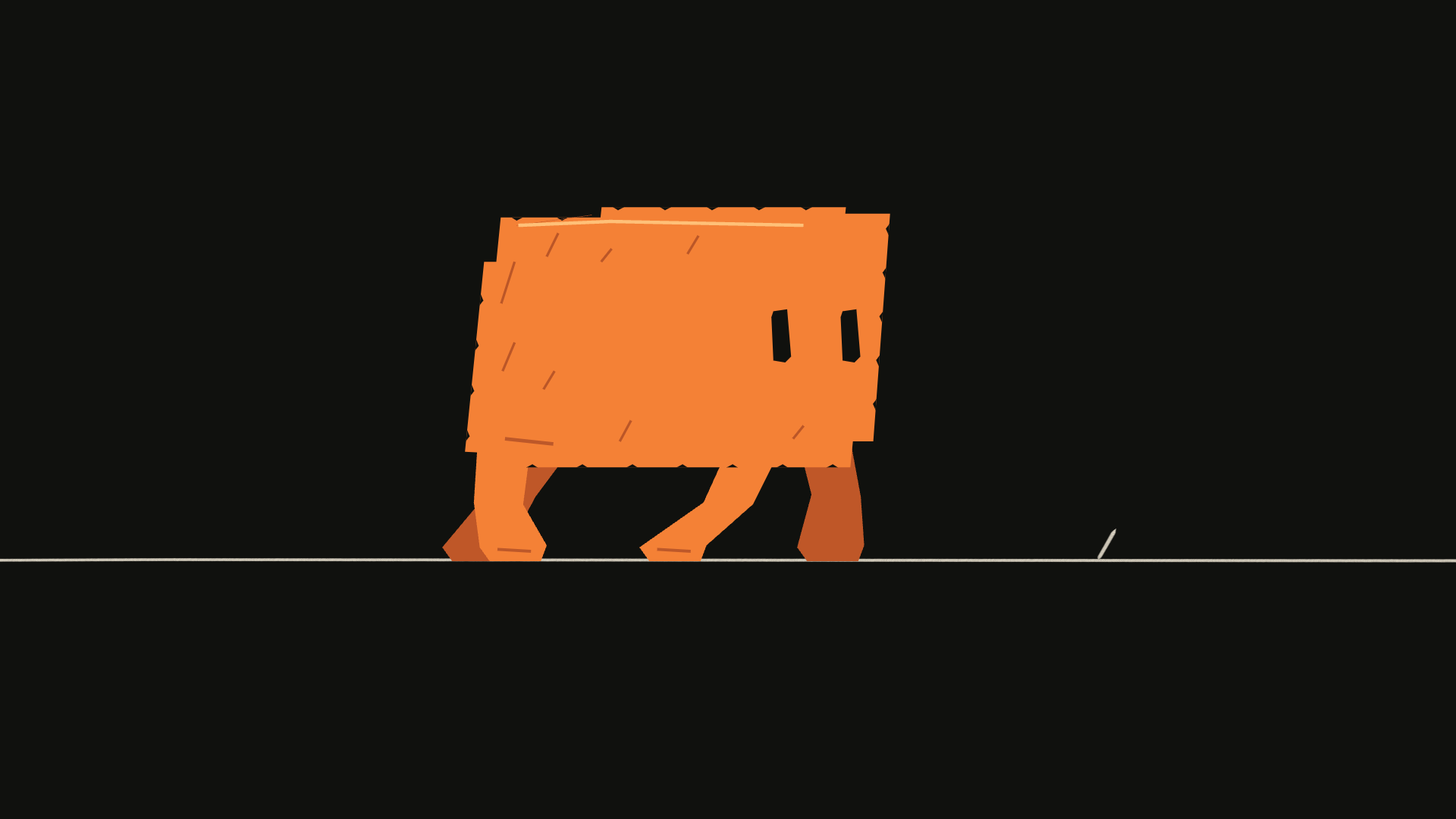
These images show the same drawing at frame 128. Only the camera changes. In the downloadable example, the shot ID is hop:
project.production.addCameraKeyframe('hop', 128, {
  x: 60, y: 160, zoom: 2, rotation: 0,
});
Positive camera X moves the viewing position right, so artwork moves left in the frame; positive Y moves the viewing position down. Zoom is centered on the frame after pan. Zoom and root-plane depth must be positive.
project.production.updateCameraKeyframe(shot.id, endKey, { zoom: 1.6 });
console.log(project.production.cameraKeyframes(shot.id, { limit: 20 }));
Use removeCameraKeyframe(shotId, keyId) to delete a key. X, Y, zoom, and rotation interpolate independently, using the same easing choices as layer animation.
To remove only zoom from a mixed camera key, use removeCameraKeyframeChannels(shotId, keyId, ['zoom']). Other channels on that key remain. Keys at the same frame merge supplied channels. A channel holds its nearest value before its first key and after its last key; unkeyed channels keep the default framing.
Build depth
Give root layers different positive depth values to produce multiplane parallax when the camera moves. Depth 1 is the default plane; smaller values respond more strongly to camera movement and larger values less strongly. Keep foreground, character, and background artwork on separate root planes. A group's children remain on the group's plane.
const foreground = panel.addGroup('Foreground', { depth: .7 });
const background = panel.addGroup('Background', { depth: 2 });
Multiplane depth changes camera projection; it does not turn flat artwork into a 3D model. Render the start, middle, and end of a move to check framing and overlaps.
Use production.setPlaneDepth(layerId, depth) to change a plane later, or a layer key's depth channel to animate it. Projection uses pan divided by depth and zoom raised to 1 / depth. Root layer order still controls overlap. Depth does not reorder layers or create perspective geometry.
Evaluate without playback
import { evaluateCamera } from 'codeboard-studio';
const keys = project.production.cameraKeyframes('hop', { limit: 100 });
console.log(evaluateCamera(keys, 128));
Pass the full set of relevant keys when evaluating, including keys bracketing the requested frame. A truncated query can give a different interpolation result. Rendering a project evaluates its complete timeline automatically.
Framing guides and isolated artwork
import { renderPanelPNG, renderCompositionGuides } from 'codeboard-studio';
import { writeFile } from 'node:fs/promises';
await writeFile('source-pose.png', await renderPanelPNG(project, 'performance', {
  frame: 128, camera: false, annotations: false, layerIds: ['clawd'],
}));
await writeFile('guides.png', await renderCompositionGuides(project, 'performance', {
  frame: 128, thirds: true, safeInset: .08, horizonY: 800,
  vanishingPoints: [{ x: 960, y: 400 }],
}));
Guides are review overlays; they do not modify the document. Horizon and vanishing-point positions are output-frame coordinates. safeInset is a fractional inset on each edge, not a named broadcast-safe standard. Layer isolation respects its hierarchy; a hidden ancestor can still hide the selected artwork.
Inspect a camera frame
import { renderFramePNG } from 'codeboard-studio';
import { writeFile } from 'node:fs/promises';
await writeFile('camera-check.png', await renderFramePNG(project, 36));
Frame rendering evaluates both the camera and artwork animation. A panel drawing and a camera-framed timeline image serve different review tasks; use exact frame renders for timing decisions.